// Career Guide
Part-66 Module Examinations
TRITECH is approved to conduct Part-66 examinations. No university required — sit the modules here and build toward your AML.
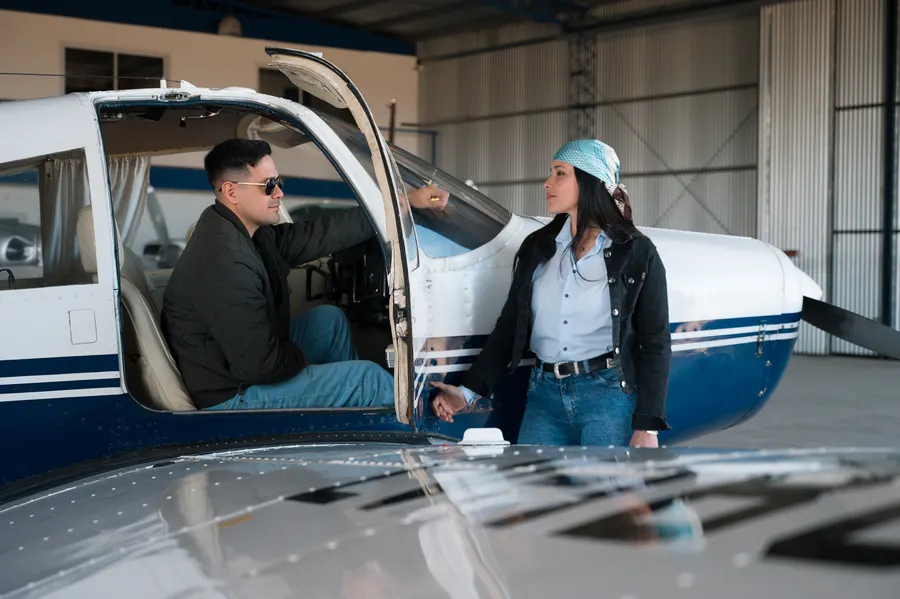
TRITECH is approved to conduct Part-66 examinations. No university required — sit the modules here and build toward your AML.
Check back soon, or submit an inquiry — we will notify you when a new session is confirmed.
Enquire About Module Exams →EASA Part-66 divides the theoretical knowledge required for an Aircraft Maintenance Licence into a set of numbered modules. Each module corresponds to a distinct subject area — from mathematics, physics, and electrical fundamentals through to aircraft structures, powerplant systems, and avionics. To obtain an AML, a candidate must demonstrate competence across all modules applicable to the licence category they are seeking.
A module examination is the formal written assessment administered at the end of each subject. Under Part-66, these examinations must be conducted by, or under the authority of, the competent national aviation authority — unless the examination is carried out by an approved Part-147 maintenance training organisation. TRITECH holds a Part-147 approval that includes examination authority. This means candidates complete their examinations directly at TRITECH's facilities in Riga, under TRITECH's own invigilated and regulated examination process. There is no need to register with, travel to, or wait for an available slot at a separate examination body.
Upon passing each module examination, TRITECH issues a Certificate of Recognition (CofR). This is the official document that records the candidate's attainment and is subsequently submitted to the national civil aviation authority as evidence of theoretical knowledge compliance when applying for the AML.
No degree required. The module examination route is the official EASA pathway for candidates without a prior recognised academic qualification. A school-leaving certificate is sufficient to begin. There is no prerequisite university degree, no prior engineering qualification required, and no minimum age beyond the standard EASA requirement of 18 years to hold an AML. What matters is demonstrated knowledge in the examination room — and that is something TRITECH's structured instruction programme is specifically designed to deliver.
The full set of Part-66 modules covers a broad technical curriculum. The specific modules required depend on the licence category being sought. For a B1.1 (turbine aeroplanes) licence — the most common commercial target — all 17 modules are examined. The subjects range from foundational science through to aircraft-specific systems:
| Module | Subject | B1 | B2 |
|---|---|---|---|
| 01 | Mathematics | Yes | Yes |
| 02 | Physics | Yes | Yes |
| 03 | Electrical Fundamentals | Yes | Yes |
| 04 | Electronic Fundamentals | Yes | Yes |
| 05 | Digital Techniques & Electronic Instrument Systems | Yes | Yes |
| 06 | Materials and Hardware | Yes | Yes |
| 07 | Maintenance Practices | Yes | Yes |
| 08 | Basic Aerodynamics | Yes | Yes |
| 09 | Human Factors | Yes | Yes |
| 10 | Aviation Legislation | Yes | Yes |
| 11A | Turbine Aeroplane Aerodynamics, Structures & Systems | Yes | — |
| 11B | Piston Aeroplane Aerodynamics, Structures & Systems | Sub-cat only | — |
| 12 | Helicopter Aerodynamics, Structures & Systems | Sub-cat only | — |
| 13 | Aircraft Aerodynamics, Structures & Systems (B2) | — | Yes |
| 14 | Propulsion (B2) | — | Yes |
| 15 | Gas Turbine Engine | Yes | — |
| 16 | Piston Engine | Sub-cat only | — |
| 17 | Propeller | Yes | — |
Module 11A is the largest single module in the B1.1 curriculum and covers the full scope of turbine transport-category aeroplane systems in considerable depth — structures, hydraulics, fuel, pressurisation, ice protection, electrical generation, flight controls, and more. TRITECH's instruction programme allocates substantial classroom and workshop time to this module to reflect its weight in the overall curriculum and its direct relevance to daily maintenance work.
TRITECH delivers module instruction on a structured schedule. Each module is taught as a dedicated study block, combining classroom theory with practical demonstrations and workshop exercises where the subject matter requires it. Candidates attend instruction for the full duration of the module's scheduled hours before sitting the examination.
The examination itself is conducted under formal invigilation at TRITECH's Riga facility. The format follows the Part-66 standard: multiple-choice questions with answer options drawn from the examination specifications published in EASA AMC 66.A.25. Examinations are timed and conducted in a controlled environment. Pass marks follow the Part-66 minimums — 75% for most modules. Candidates who do not achieve the pass mark on a first attempt are permitted to resit after a mandatory waiting period in accordance with Part-66 rules.
Once a module is passed, TRITECH issues the Certificate of Recognition for that module. CofRs accumulate throughout the programme — each passed module adds a document to the candidate's growing evidence package. When all required modules are complete, the full set of CofRs is submitted to the Civil Aviation Authority of Latvia (or the candidate's home authority) as part of the AML application. The authority reviews the CofRs alongside the experience and training documentation, and issues the licence once all requirements are satisfied.
Examination authority matters. Not all training organisations hold examination authority. Where a training provider does not hold this authority, candidates must sit their Part-66 module examinations separately at the national authority's own examination centres — which may involve additional registration, scheduling delays, and travel. TRITECH's Part-147 approval includes full examination authority, so the entire theoretical knowledge process — instruction, examination, and certification — takes place under one roof.
The module examination route is designed to be accessible. EASA Part-66 does not require a prior engineering degree or any specific academic background beyond general secondary education. The following groups are well-suited to this pathway:
Completing all required module examinations and accumulating the corresponding Certificates of Recognition satisfies the theoretical knowledge requirement of Part-66. It is one of three pillars required for AML issuance — the others being practical experience and, where applicable, approved basic training hours.
Once theoretical knowledge is demonstrated, candidates move into the experience phase: a minimum of two years of documented on-the-job maintenance experience gained under a Part-145 approved organisation. During this period, candidates work alongside licensed engineers on live commercial aircraft, building the practical competence that the examinations cannot replicate. The experience must be logged, verified by the Part-145 organisation's Quality department, and submitted to the authority as part of the licence application.
Many candidates also complete a type rating course either during or immediately after the experience phase. A type rating endorsement — for example, on the Airbus A320 family or Boeing 737 NG — specifies the aircraft on which the engineer can exercise independent certifying authority. Without an endorsed type rating, the AML is issued but the engineer cannot sign maintenance releases independently on any specific type. TRITECH delivers approved type rating training for nine major aircraft types.
For a complete picture of the full licensing sequence — from first module through to type-rated AML — see the EASA Licensing Path overview.
Submit a Training Inquiry — our team will advise on the right starting point for your background.
Get Started →We use cookies and analytics to improve your experience. By continuing, you agree to our use of cookies in accordance with EU ePrivacy rules.